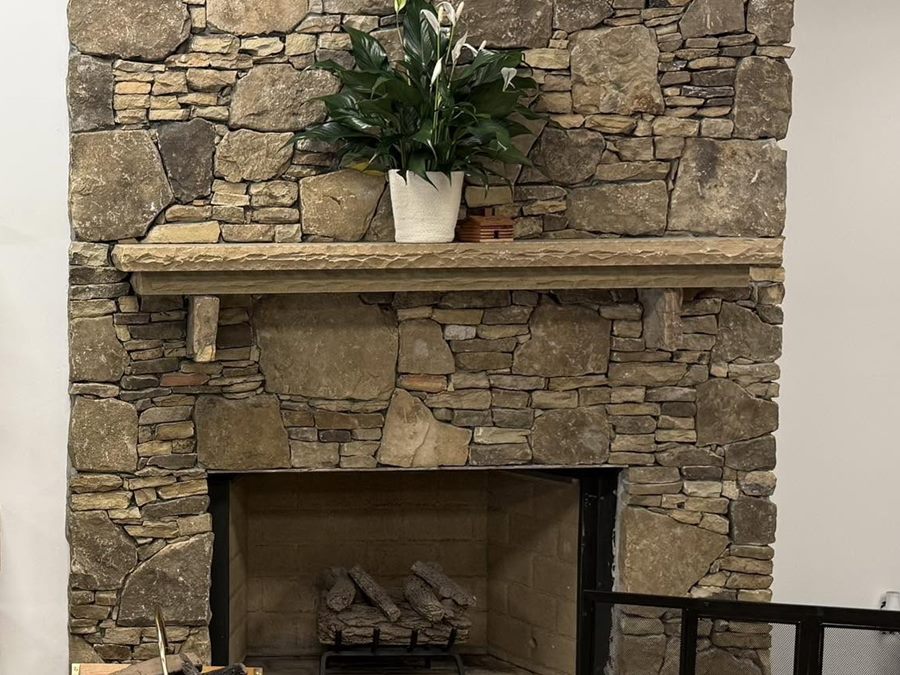
Fireplace service & repair
Pilot will not stay lit. Glass going black. A remote that quit working the week it got cold. We repair gas fireplaces, inserts, and log sets across Northwest Georgia, including units we did not sell you, and we have been doing it out of the same Rome shop since 1974.
What we do
Three kinds of visit.
Most calls we get are one of these. If you are not sure which one you need, describe what the fireplace is doing and we will tell you.
Diagnosis & repair
Something has stopped working. We find out why and fix it: pilots, thermocouples and thermopiles, gas valves, igniters, blowers, remotes and receivers, and log sets that have stopped looking right. Common parts ride on the truck, so many repairs finish in one visit.
Annual service & chimney cleaning
The visit that prevents the visit above. We clean burner ports and orifices, check the pilot and safety sensors, correct log placement, inspect venting, and test the safety shutoff. For wood-burning fireplaces, chimney cleaning removes the creosote that causes chimney fires.
Installation
New fireplaces, inserts, log sets, stoves, and outdoor units installed to code by our own crew, the same people who will come back if it ever needs service. For new construction and builder work, see the contractors page.
Units we did not sell
We service other people’s installs too. If the company that put your fireplace in is gone (which happens a lot with hearth equipment that outlives the installer), bring us the brand and model and we will tell you honestly whether it is worth repairing.
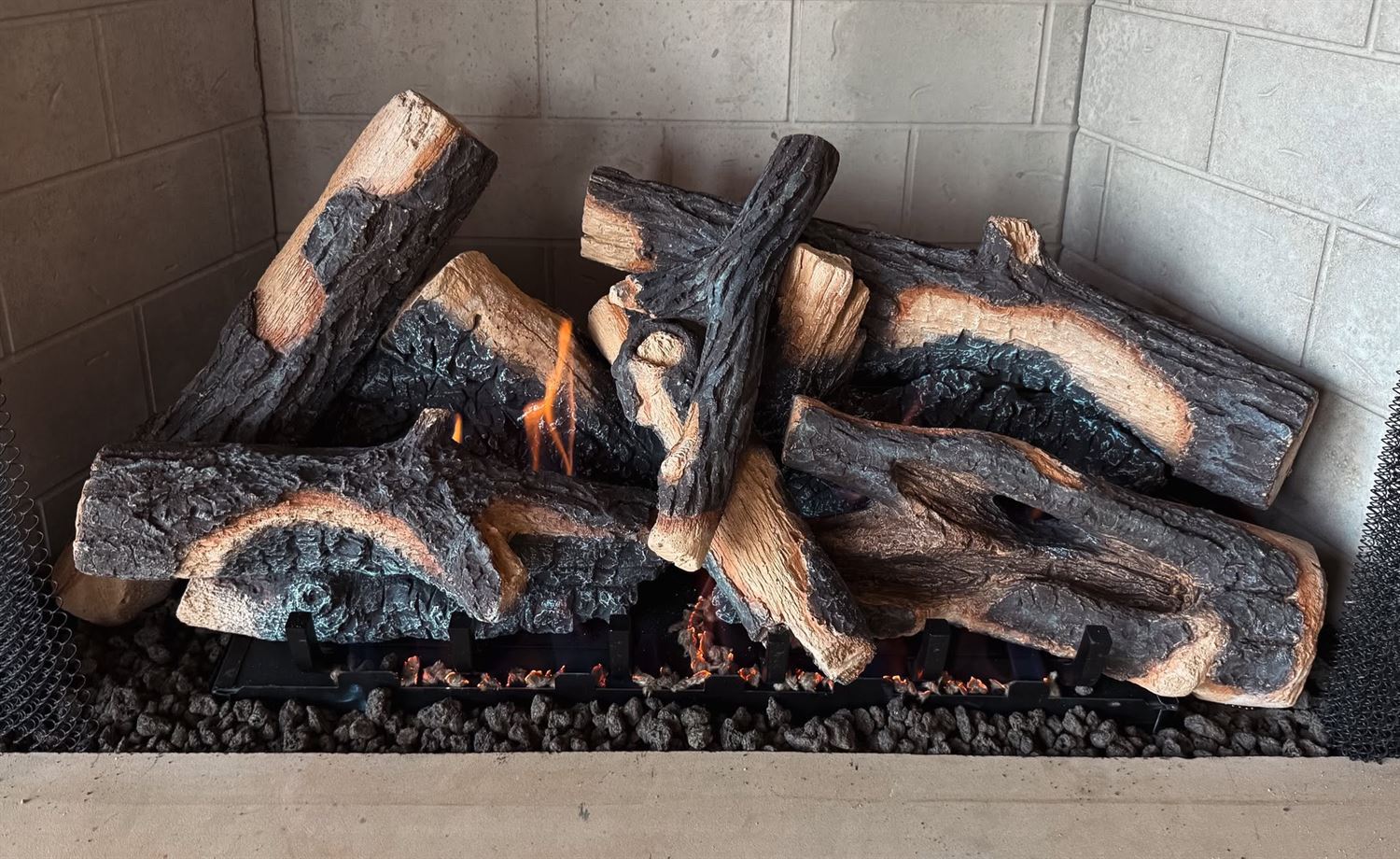
What usually turns out to be wrong.
Hearth equipment fails in a small number of predictable ways. Here is what the symptom usually means, so you know what you are dealing with before anybody comes out.
- Pilot lights, then dies when you let go. Almost always a worn thermocouple or thermopile, the sensor that proves to the gas valve that the pilot is burning. Routine, and repairable.
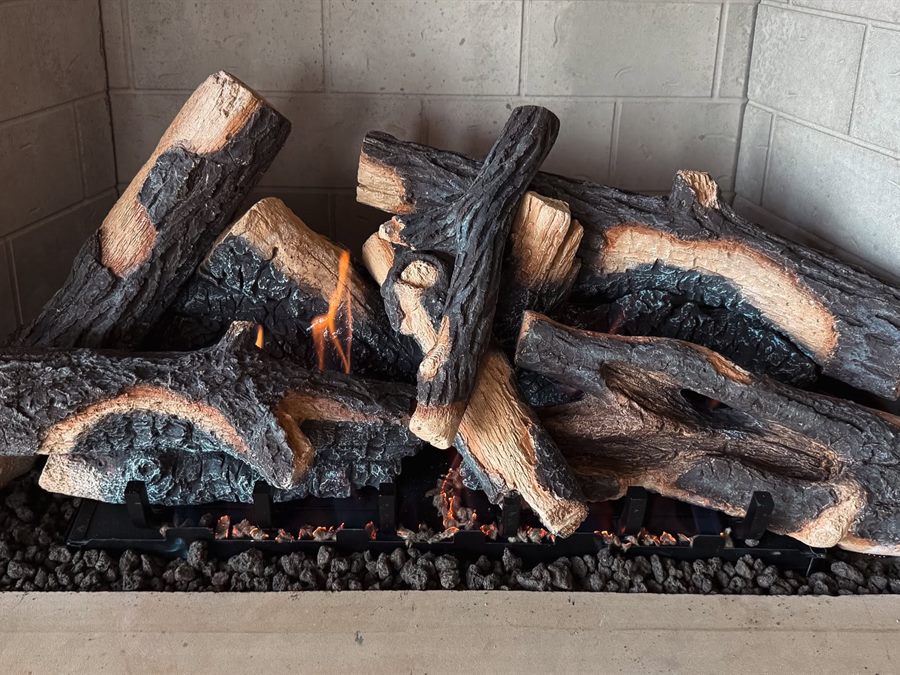
- Glass going black. Incomplete combustion, and the usual culprit is log placement. Logs get nudged during cleaning and never get put back exactly where the manufacturer intended.
- Will not light at all. Gas supply, igniter, or the control valve. Worth checking the obvious first: gas turned on, propane tank not empty, breaker on.
- Remote or wall switch does nothing. Often batteries in the remote or receiver, sometimes the receiver itself. Cheap fix more often than people expect.
- Lazy, floppy blue flame. Air-to-gas mixture or a partial blockage. Not usually dangerous, but it is the unit telling you something.
- Faint smell the first burn each year. Normally dust burning off the heat exchanger and it passes within an hour or two. A smell of gas is a different matter. See below.
Worth checking before you call.
We are happy to come out. We are happier when we can save you the trip charge over the phone, and a few of these fix the problem outright.
- Is the gas actually on? Valves get closed over the summer and forgotten. Propane tanks run empty.
- Is the wall switch or breaker on? More service calls than you would think end here.
- Fresh batteries. In both the remote and the receiver, which usually hides behind the lower louver.
- Is the damper open? On a vented set the damper must stay open. Many have a clamp preventing full closure. If yours does not, that matters.
- Photograph the data plate. Brand, model, and serial are usually on a plate behind the lower door or under the unit. Having it ready means we arrive with the right parts.
If you smell gas: leave the building. Do not flip switches and do not use a phone inside. Call your gas utility or 911 from outside, not us first. We would rather lose the service call than have you take a chance.
Common questions
What people ask us first.
My pilot light will not stay lit. What is wrong?
A pilot that lights and then goes out the moment you release the knob is most often a failing thermocouple or thermopile, the small sensor that tells the gas valve the pilot is actually burning. It can also be a dirty pilot orifice or weak gas supply. It is one of the most common faults we see, and it is repairable.
Why is my fireplace glass turning black?
Black or gray film means incomplete combustion. The usual cause is log placement. Ceramic logs sit in a specific arrangement, and moving them even slightly puts material in the flame path. Beyond that it can be a misadjusted air shutter or blocked burner ports. All three are things we correct on a service visit.
Do gas fireplaces and gas logs need annual service?
Yes. Once a year we check the pilot and safety sensors, clean the burner ports and orifices, verify log placement, inspect the venting, and test the safety shutoff. It is a small amount of money that prevents the January phone call when you actually want the fire.
How often should a chimney be cleaned?
For a wood-burning fireplace used regularly through the season, once a year. Creosote builds up in the flue and is the main cause of chimney fires. If you only burn a handful of times a year you may go longer between cleanings, but the chimney should still be looked at annually.
Do you service fireplaces you did not sell?
Yes, routinely. Hearth equipment often outlives the company that installed it. Give us the brand and model off the data plate and we will tell you what parts are still available and whether repair or replacement is the better use of your money.
What should I do if I smell gas?
Leave the building immediately. Do not switch anything on or off, and do not use a phone inside. From outside, call your gas utility or 911. Do not call us first, and do not go looking for the leak yourself.
Next step
Tell us what it is doing.
Brand and model if you have them, plus what happens when you try to light it. We call back within one business day. In the busy stretch from October through January, sooner is better.
- Rome Shop
- 3 Holmes Ave NW
Rome, GA 30165
Get directions - Canton Shop
- 3275 Marietta Hwy
Canton, GA 30114
Get directions - Hours
- Monday–Friday
8:30 AM – 4:00 PM
We call back within one business day.
Also on the floor
Looking to replace instead?
Sometimes the honest answer is that a repair is throwing money at a unit near the end of its life. If that is where you are, start here.